Academic Emergency Medicine
- good results with abs without aspiration
- Uptodate recommends aspiration only if overlying skin shows impaired perfusion from tense effusion or if no improvement after 36-48hrs of abx.
American Journal of Emergency Medicine
None
Annals of Emergency Medicine
- The 90-day incidence of venous thromboembolism among patients discharged from the ED with ankle fractures requiring immobilization was 1.3%. These patients had a 5.7- to 6.3-fold increased hazard compared to matched controls. Certain patients immobilized for ankle fractures are at higher risk of venous thromboembolism, and this should be recognized by emergency physicians.
Bloodless Management of the Anemic Patient in the Emergency Department
- Among preschool-aged children with gastroenteritis seeking ED care, oral ondansetron administration was associated with a reduction in index ED visit intravenous fluid administration; it was not associated with intravenous fluids administered within 72 hours, hospitalization, or vomiting and diarrhea in the 24 hours following discharge.
BMJ
Atorvastatin versus placebo in patients with covid-19 in intensive care: randomized controlled trial
- No benefit but safe
- The findings suggest that SSRIs provide high rates of remission with low risk of adverse events for the treatment of panic disorder. Among SSRIs, sertraline and escitalopram were associated with high remission and low risk of adverse events. The findings were, however, based on studies of moderate to very low certainty levels of evidence, mostly as a result of within study bias, inconsistency, and imprecision of the findings reported.
Circulation
None
CJEM
Two troponins, one troponin, none… the dawn of troponin‐less decision aids
Results Of the 1150 patients included in this study, 820 (71.3%) had no history of CAD, 97 (8.4%) had index AMI and 123 (10.7%) had 30-day MACE. In patients with no prior history of CAD, HEAR ≤ 1 identifi ed 202 (24.6%) of patients as very low risk for 30-day MACE with 98.4% (95% CI 91.6ñ 99.9%) sensitivity. Among all patients, HEAR ≤ 1 identifi ed 202 (17.6%) patients as very low risk for 30-day MACE with 99.2% (95% CI 95.6ñ 99.9%) sensitivity.
Conclusions A HEAR score ≤ 1 can identify more than 17% of all patients as very low risk for index AMI and 30-day MACE and unlikely to benefi t from troponin testing. Broad implementation of this strategy could lead to signifi cant resource savin
EMCRIT
Emergency Medicine Journal
None
EMRAP
Unprovoked Seizures in Children
- LP if <6 months, 6-12 months various options
- No imaging typically
- No meds usually
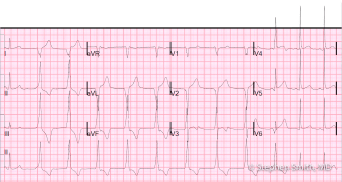
Cardiology Corner: Post-MI Dysrhythmias
- Accelerated Idioventricular Rhythm (AIVR)
- The presence of AIVR in a patient presenting with concern for acute coro-nary syndrome (ACS) should prompt cath lab activation.
- Non-sustained monomorphic VT (< 30 seconds)
- No decrease in mortality/morbidity
- No need to start anti-arrhythmics
- Sustained monomorphic VT (Lasting > 30 seconds or unstable).
- Shock if unstable
- Amiodarone if stable
- A “Best BETs” in 2014 concluded, “There is no scientific evidence for the routine use of nasogastric tubes in adults with small bowel occlusion.”
- They are routinely rated as the most painful procedure performed in the ED.
- Bottom line: Nasogastric tubes clearly do harm in terms of patient discomfort and there is no evidentiary basis for their role in the modern management of SBO. This doesn’t mean that nasogastric tubes play no role. They may be useful in patients with vomiting refractory to antiemetics or patients with distended stomachs. We simply do not know who benefits from them and instead of being a routine part of care, selective use makes more sense.
- Rib fractures that are not seen on a chest radiograph are generally not clinically significant (2/3 of rib fxs seen on CT are missed on plain film)
- Fractures of the first and second ribs place patients at high risk for vascular injuries. If seen on a chest radiograph, CT angiography of the neck should be performed.
- When read by a radiologist, rib series are not more sensitive than a standard two-view chest x-ray, and result in twice the amount of ionizing radiation to the patient.
JAMA
None
Journal of Emergency Medicine
Multisystem Inflammatory Syndrome in Children
Journal of Trauma and Acute Care Surgery
Lancet
None
NEJM
Early Remdesivir to Prevent Progression to Severe Covid-19 in Outpatients
- Among nonhospitalized patients who were at high risk for Covid-19 progression, a 3-day course of remdesivir had an acceptable safety profile and resulted in an 87% lower risk of hospitalization or death than placebo.
The Goldilocks Time for Remdesivir — Is Any Indication Just Right?
Medical Conditions and High-Altitude Travel
Rapid Diagnostic Testing for SARS-CoV-2
PEDIATRICS
None
REBELEM
None
Resuscitation
None
 Internet Book of Emergency Medicine