Academic Emergency Medicine
Diagnostic Accuracy of the HINTS Exam in an Emergency Department: A Retrospective Chart Review
A total of 2,309 patients met criteria for inclusion in the study. Physician uptake of the HINTS exam was high, with 450 (19.5%) dizzy patients receiving all or part of the HINTS. A large majority of patients (96.9%) did not meet criteria for receiving the test as described in validation studies; most often this was because patients lacked documentation of nystagmus or described their symptoms as intermittent. In addition, many patients received both HINTS and Dix-Hallpike exams, which are intended for use in mutually exclusive patient populations. In no case was dizziness due to a central cause identified using the HINTS exam.
American Journal of Emergency Medicine
No good free articles this month
Annals of Emergency Medicine
- Sensitivity only 55% for gonorrhea with urine or endocervical swab so authors recommend empiric treatment rather than waiting for results. There is a counter-argument in the same issue but this one makes more sense to me. Probably should incorporate population characteristics and patient shared-decision making.
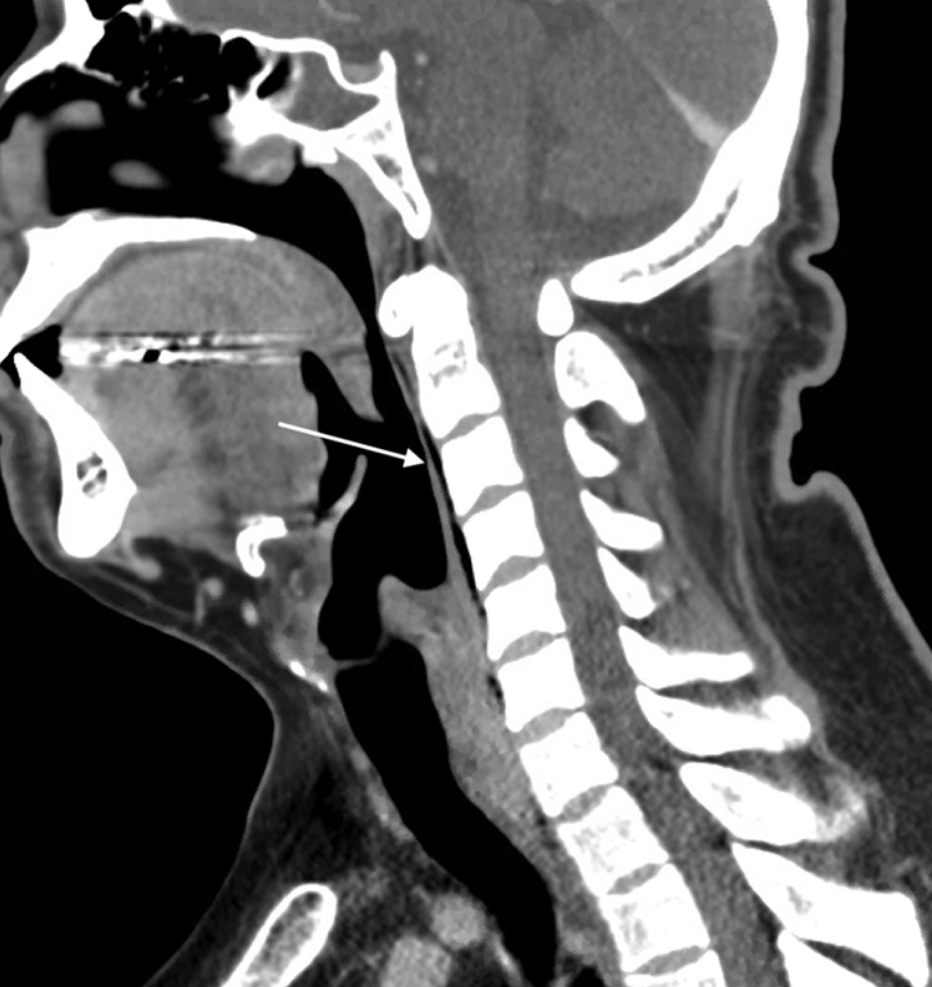
- A 30-year-old man presented to the emergency department with throat pain and oral intolerance of fluids for several hours. Earlier that day, an outpatient operation was aborted after multiple unsuccessful intubation attempts in the operating room. The patient had unremarkable vital signs, noting only odynophagia. Computed tomography (CT) of the neck and an esophagram with water-soluble contrast were acquired.
Bridging Oceans and Thrombolysis April 2021 Annals of Emergency Medicine Journal Club
- This small trial found a trend toward benefit for the non-lytic group when comparing between patients treated with EVT alone versus EVT plus IVT for acute CVA.
BMJ
Circulation
No good free articles this month
EMCRIT
Neuroleptic Malignant Syndrome
Sodium channel blocker toxicity (including tricyclic antidepressants)
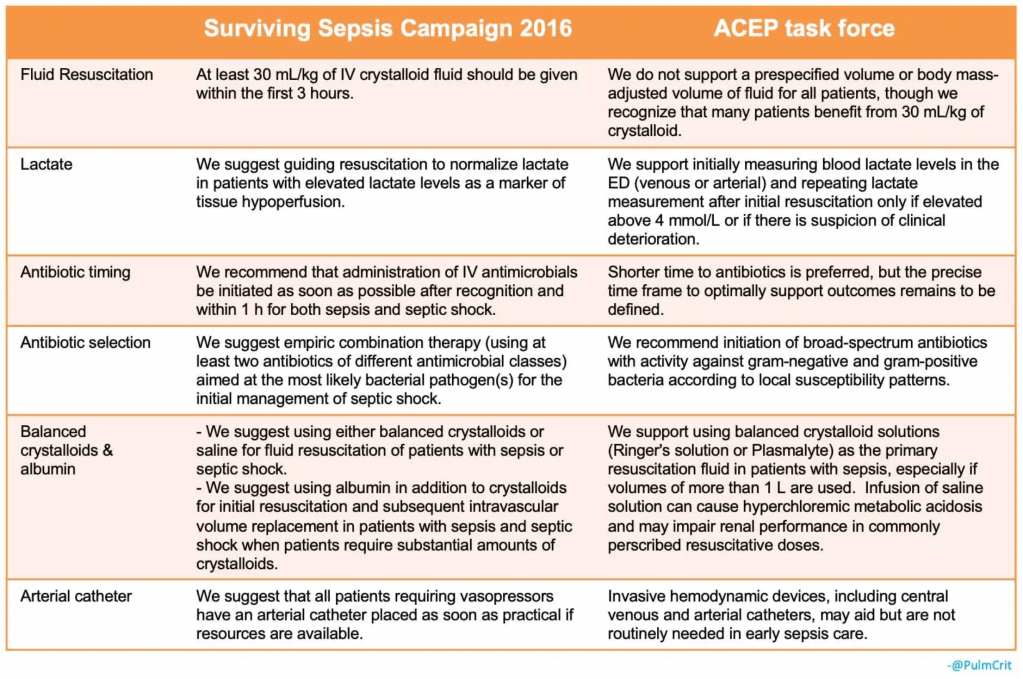
PulmCrit – ACEP task force on septic shock should replace the Surviving Sepsis Campaign
- The ACEP consensus-based task force report was just published (see lead article in Annals of EM section above). Although spearheaded by ACEP, the report is also endorsed by the Society of Hospital Medicine (SHM) and the Society of Critical Care Medicine (SCCM).
Emergency Medicine Journal
No good free articles this month
EMRAP
No good articles this month
JAMA
NEJM
- Review article
Tocilizumab in Hospitalized Patients with Severe Covid-19 Pneumonia
- No benefit at 28 days.
Interleukin-6 Receptor Antagonists in Critically Ill Patients with Covid-19
- In critically ill patients with Covid-19 receiving organ support in ICUs, treatment with the interleukin-6 receptor antagonists tocilizumab and sarilumab improved outcomes, including survival, at 90 days.
- All patients with an adrenal mass that is discovered during diagnostic testing for another condition (an “incidentaloma”) should undergo biochemical testing to detect pheochromocytoma and excess cortisol secretion, and those who also have high blood pressure should undergo biochemical testing to detect primary hyperaldosteronism.
- Patients with pheochromocytoma should undergo adrenalectomy after adequate presurgical alpha- blockade and beta-blockade, if necessary.
- Patients with mild autonomous cortisol excess and primary hyperaldosteronism may benefit from adrenalectomy, but treatment should be individualized.
- Nonfunctioning adrenal tumors that have an attenuation of 10 Hounsfield units or less on computed tomographic (CT) evaluation and that are smaller than 4 cm in greatest diameter generally do not warrant intervention or long-term follow-up.
- All other adrenal incidentalomas with indeterminate features on imaging may warrant additional imaging with contrast-enhanced CT, magnetic resonance imaging with chemical-shift analysis, positron-emission tomography–CT with 18F-fluorodeoxyglucose, or all of these tests. The management of these masses should be individualized and should involve a multidisciplinary team consisting of an endocrinologist, an endocrine surgeon, and a radiologist.
Dexmedetomidine or Propofol for Sedation in Mechanically Ventilated Adults with Sepsis
- No difference
Vancomycin Infusion Reaction — Moving beyond “Red Man Syndrome”
- Authors recommend replacing red man syndrome with infusion reaction for all non-immune mediated reactions.
- Uptodate uses the term vancomycin flushing syndrome or vancomycin infusion reaction.
- The two can be distinguished if it is the first time a patient has been exposed to vancomycin it will not be an IgE reaction.
- Otherwise they can be difficult to distinguish and may require allergy consult/testing to distinguish.
- Typically the infusion reaction is characterized by upper body, neck an face greater than lower body flushing, erythema and itching. Pain and muscle spasms in the back and chest as well as dyspnea and hypotension may occur.
Lower or Higher Oxygenation Targets for Acute Hypoxemic Respiratory Failure
- No difference
- Review article
REBELEM
REBEL Cast Ep98: Intravenous Contrast and Long-Term Kidney Impairment
- In this methodologically novel trial (Goulden R et al. Association of Intravenous Radiocontrast With Kidney Function: A Regression Discontinuity Analysis. JAMA Intern Med 2021. [Link is HERE]) there was no association between IV contrast from CTPA and worsening eGFR up to 6 months after index ED visit. Although a randomized clinical trial would be great, this may be the highest-level evidence we achieve. This trial plus other observational trials on this topic all point to a change in protocols to allow for IV contrast in patients regardless of kidney function.
- In summary, the evidence for using a patient’s GCS score is mixed. Recent review articles have highlighted the paucity of strong evidence behind the classic adage of “GCS less than 8, intubate”. Orso D et al. Endotracheal intubation to reduce aspiration events in acutely comatose patients: a systematic review. Scand J Trauma Resusc Emerg Med. 2020.
Amal Mattu

 Internet Book of Emergency Medicine